
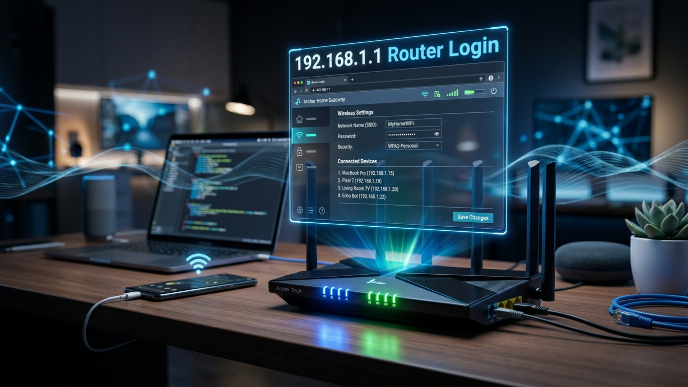
The internet has become a basic need in every home, office, and business, but very few people actually understand how their connection works behind the scenes. Every Wi-Fi network is controlled by a device called a router, and one of the most important access points to manage that router is the IP address 192.168.l.1. Many users mistakenly type it as 192.168.l.1, which is incorrect and prevents access to router settings.
This IP address is not a normal website or online page. Instead, it is a private gateway used inside local networks. When entered into a browser, it opens a router control panel where users can manage Wi-Fi settings, security options, passwords, connected devices, and network performance. According to networking explanations, 192.168.l.1 is part of a reserved private IP range used specifically for internal communication between devices and routers.
Understanding this system is important because it gives users full control over how their internet behaves, how secure it is, and how devices connect within a network.
What is 192.168.1.1 and Why It Is Used in Networks
The IP address 192.168.l.1 is known as a default gateway address. It is the main entry point through which users access their router’s settings. When a device is connected to a Wi-Fi network, this IP acts like a bridge between the user and the router’s internal system.
Most router brands such as TP-Link, Netgear, Linksys, ASUS, and D-Link use this IP as a standard login gateway. It is part of a private IP range that includes addresses from 192.168.0.0 to 192.168.255.255, which are reserved for internal use only and cannot be accessed from the public internet.
In simple terms, 192.168.l.1 is like the control center of your internet connection. Without it, you cannot modify settings or manage your network properly.
How 192.168.1.1 Router Login Works
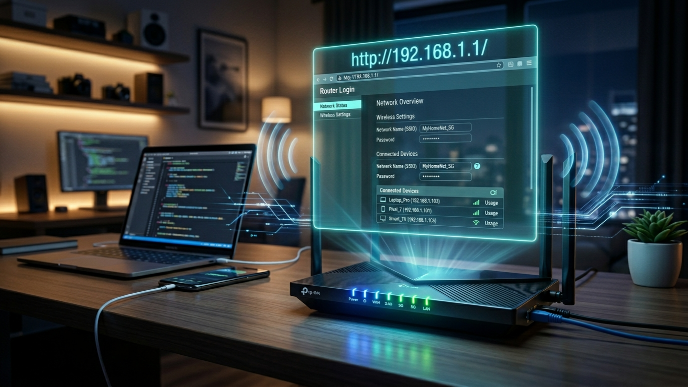
To access the router settings page, the user must first connect to the Wi-Fi network or directly connect using an Ethernet cable. Once connected, they open a web browser and type http://192.168.l.1 into the address bar.
After entering the IP address correctly, a login page appears. This page asks for a username and password, which are often provided by the internet service provider or printed on the back of the router device.
Once login is successful, the user enters the router dashboard. From here, all network settings can be controlled, including Wi-Fi name, password, device access, and internet security options.
Difference Between 192.168.1.1 and 192.168.l.1
A very common issue faced by users is typing the address incorrectly as 192.168.l.1 instead of 192.168.1.1. The mistake happens because the number “1” and the letter “l” look similar on many screens.
However, 192.168.l.1 is not a valid IP address and will never open a router login page. The correct format must contain only numbers and dots.
Even a small typing mistake can stop the router page from loading, which is why users often think their internet is not working when the real issue is just a wrong address entry.
Devices and Brands That Use 192.168.1.1
Many popular router manufacturers use 192.168.l.1 as their default gateway. These include well-known brands such as Linksys, ASUS, Netgear, TP-Link, D-Link, and Huawei.
Each router model may use slightly different login details, but the access method remains the same. Users simply enter the IP address into a browser and reach the control panel.
Some routers may also use alternative addresses like 192.168.0.1 or 10.0.0.1, but 192.168.1.1 remains one of the most commonly used default gateways worldwide.
What You Can Do After Logging into 192.168.l.1
Once inside the router dashboard, users gain full control over their internet network. One of the most common changes is updating the Wi-Fi name and password to improve security and personalization.
Users can also view all connected devices, block unknown users, limit internet speed for specific devices, and create guest networks for visitors.
Advanced settings may include firewall configuration, port forwarding, DNS settings, and firmware updates. These options help improve both security and performance of the network.
Why 192.168.l.1 Sometimes Does Not Open
There are several reasons why the login page may fail to open. The most common reason is incorrect typing of the IP address.
Another reason is that the router might be using a different default gateway such as 192.168.0.1 or 10.0.0.1 depending on the manufacturer.
Network connection issues, browser cache problems, or firewall restrictions can also prevent access to the router page. Restarting the router often solves temporary connection issues
Understanding Private IP Address Systems
The IP address 192.168.l.1 belongs to a special category called private IP addresses. These addresses are used only inside local networks like homes, schools, and offices.
Private IPs are not visible on the public internet, which makes them more secure for internal communication. Every device connected to a router receives its own local IP address.
The router itself uses 192.168.1.1 as a central control point to manage all connected devices and route internet traffic correctly.
Security Importance of Router Login Access
Accessing 192.168.l.1 gives complete control over the network, which is why security is extremely important. If unauthorized users gain access, they can change Wi-Fi settings or steal bandwidth.
That is why it is strongly recommended to change default login credentials after setup. Weak passwords like “admin” or “1234” should be avoided.
Regular firmware updates also help fix security vulnerabilities and improve router performance. Checking connected devices frequently ensures that no unknown users are accessing the network.
Troubleshooting Common Router Login Issues
If 192.168.1.1 does not work, the first step is to carefully recheck the IP address. Many failures are caused by simple typing errors.
If the page still does not load, restarting both the router and the device can help reset the connection.
Another solution is checking the router label for the correct default gateway address. If nothing works, resetting the router to factory settings may be necessary, but this will erase all custom configurations.
Advanced Router Settings Explained Simply
Inside the router dashboard, users will find many advanced settings that control how the network behaves. These include DHCP settings, MAC filtering, firewall rules, and port forwarding.
These features allow users to control which devices can connect, how traffic flows, and how secure the network is.
While these settings may look technical, they are designed to give users complete control over their internet environment.
How to Improve Wi-Fi Performance Using Router Settings
Router settings accessed through 192.168.l.1 can also improve internet speed and stability. Changing Wi-Fi channels can reduce interference from nearby networks.
Positioning the router in a central location improves signal strength throughout the home. Updating firmware ensures better performance and bug fixes.
Limiting connected devices also helps maintain stable speed for important activities like streaming, gaming, or work.
Conclusion
The IP address 192.168.l.1 plays a crucial role in modern internet networks by acting as the main control gateway for routers. It allows users to manage Wi-Fi settings, control connected devices, improve security, and customize their internet experience.
Although many users find it technical at first, it is actually a simple system designed to give full control over home and office networks. Understanding how it works helps users fix problems, improve performance, and secure their internet connection effectively.
