
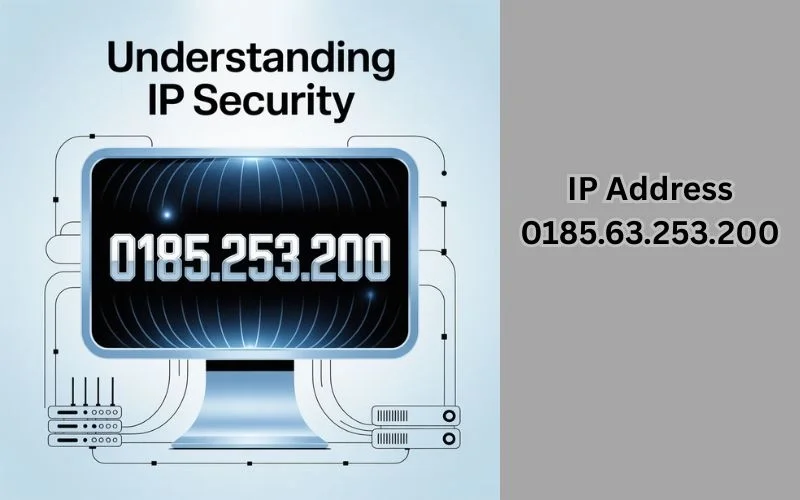
The string 0185.63.253.200 looks like a standard IPv4 address, but it often creates confusion among users who encounter it in logs, network tools, or online discussions. Many people search for this type of pattern because it appears technical and closely resembles a real internet address. In reality, however, certain formatting rules in the Internet Protocol system determine whether an address is valid, and not every IP-like string can function on a network. Understanding why 0185.63.253.200 is unusual requires a closer look at how IP addressing works and how modern systems interpret numeric network data.
In today’s digital environment, IP addresses are essential identifiers that allow devices to communicate across local and global networks. Every website visit, app request, or online transaction depends on correctly structured IP information. When users see unfamiliar formats such as this one, they often assume it might represent a hidden server, a misconfigured device, or even suspicious activity. This curiosity is natural because IP addresses are deeply tied to cybersecurity, routing systems, and internet infrastructure. However, not every number sequence that resembles an IP address is valid or usable in real networking environments.
The keyword 0185.63.253.200 is especially interesting because it includes a leading zero in the first segment, which introduces ambiguity in how different systems may interpret it. Some environments may treat leading zeros differently, while modern standards aim to avoid such inconsistencies altogether. This article explains the structure of IPv4 addressing, why this format raises concerns, how systems handle invalid or ambiguous IP patterns, and what users should understand about network validation and cybersecurity implications.
What Is 0185.63.253.200 and Why It Looks Like a Real IP Address?
At first glance, 0185.63.253.200 resembles a valid IPv4 address because it follows the familiar dotted-decimal structure used across the internet. IPv4 addresses are typically written as four numerical segments separated by dots, such as 192.168.1.1 or 8.8.8.8. This visual similarity makes many users believe that 0185.63.253.200 could represent a real device or server on the internet.
However, the key issue lies in how the first segment is written. The leading zero in “0185” introduces formatting ambiguity that does not align with modern IPv4 standards. While 185 is a valid number, the presence of a leading zero can create interpretation differences in certain systems or programming environments. Because of this, such formats are considered non-standard and potentially unreliable in strict networking contexts.
In most professional networking systems, this format would be flagged during validation or automatically normalized before processing. This ensures consistency and prevents misinterpretation during routing or data transmission across systems.
How IPv4 Addressing Works in Internet Communication
IPv4, or Internet Protocol version 4, is the foundation of most modern internet communication systems. It uses a 32-bit addressing structure divided into four segments called octets. Each octet represents a numerical value between 0 and 255, allowing for billions of unique address combinations used to identify devices on networks.
As explained in networking documentation, IP addresses serve two main purposes: identifying a device and providing its location within a network structure . Without properly structured IP addresses, data packets would not know where to travel, making internet communication impossible.
Each IPv4 address must strictly follow formatting rules. These rules ensure that routers, firewalls, and servers can interpret data consistently. When any segment violates these rules, the address becomes invalid or ambiguous, leading to errors or rejection by networking systems.
Why Leading Zeros in IP Addresses Cause Confusion
One of the most important issues in 0185.63.253.200 is the leading zero in the first segment. While it may look harmless, leading zeros can create interpretation problems in computing systems. In some programming contexts, numbers with leading zeros may be interpreted as different numerical bases, such as octal instead of decimal.
This inconsistency is why modern networking standards discourage or completely disallow leading zeros in IPv4 addresses. Even if the numerical value is technically within range, the formatting introduces ambiguity that can lead to misrouting or validation errors.
For example, the value 0185 might be interpreted simply as 185 in one system but processed differently in another system that follows older or non-standard parsing rules. This is why strict validation rules exist in modern network infrastructure.
Why 0185.63.253.200 Is Considered Non-Standard
Although most of the segments in 0185.63.253.200 fall within valid IPv4 ranges, the format as a whole is considered non-standard due to inconsistent representation. IPv4 rules require each octet to be a decimal number between 0 and 255 without unnecessary formatting variations.
The presence of leading zeros violates best practices and can create inconsistencies in systems that rely on strict parsing rules. While some systems may still interpret the address as valid by stripping the leading zero, others may reject it entirely to prevent ambiguity.
This inconsistency is why such formats are often flagged in logs, validation tools, or network security systems. It is not necessarily dangerous, but it is unreliable for proper network communication.
How Network Systems Handle Invalid or Ambiguous IP Formats
Modern operating systems and network devices include built-in validation mechanisms that check whether an IP address follows correct formatting rules before allowing it to be used. When a system encounters a format like 0185.63.253.200, it may attempt normalization or reject it entirely depending on configuration.
Networking tools such as routers, firewalls, and DNS systems rely on strict parsing to avoid errors in routing data packets. If an address is unclear or non-standard, it is typically blocked or logged as an invalid entry. This helps maintain stability across network communication systems.
In enterprise environments, such entries may also be recorded in logs for diagnostic purposes. Administrators often review these logs to identify misconfigurations, software bugs, or unusual network activity patterns.
Cybersecurity Perspective on Unusual IP Patterns
From a cybersecurity perspective, unusual IP formats like 0185.63.253.200 are not automatically malicious, but they can still attract attention in security monitoring systems. Malformed or non-standard data patterns sometimes appear in scanning tools, automated scripts, or poorly configured network requests.
Security systems analyze such anomalies to detect potential threats or misconfigurations. While most modern firewalls and intrusion detection systems can handle these cases safely, unusual patterns still form part of broader behavioral analysis in cybersecurity.
It is also important for users to remain cautious when encountering IP-like strings in unknown contexts. Although this specific format is not inherently dangerous, similar patterns can sometimes appear in phishing attempts or misleading technical content designed to confuse users.
Common Mistakes in IP Address Formatting
Many invalid IP address formats are caused by simple human errors. Users may accidentally include leading zeros, exceed numeric limits, or mistype segments while configuring routers, servers, or software applications.
Another common mistake is confusing IP addresses with other numerical identifiers such as version numbers, database keys, or system-generated IDs. Because these values often look similar, users may mistakenly assume they represent valid network addresses.
Proper understanding of IPv4 structure helps prevent these issues and ensures accurate configuration in networking environments. It also reduces troubleshooting time and improves system reliability.
How to Validate an IP Address Correctly
Validating an IPv4 address requires checking four key conditions: the presence of four segments, proper dot separation, numeric-only values, and a range between 0 and 255 for each segment. Any violation of these rules results in an invalid or non-standard address.
Many programming languages include built-in validation functions that automatically check IP correctness. These tools are widely used in software development, network administration, and cybersecurity systems to prevent errors before they occur.
For general users, online IP validation tools can quickly determine whether an address is properly formatted or not. This helps avoid confusion when encountering unfamiliar IP-like strings in logs or online discussions.
Importance of IP Accuracy in Modern Networking
Accurate IP formatting is critical for reliable internet communication. Every online activity depends on correctly structured addresses to ensure that data reaches the correct destination. Even small formatting inconsistencies can cause connection failures or routing errors.
In large-scale networks, incorrect IP configuration can lead to downtime, security vulnerabilities, or data transmission issues. This is why strict validation rules are enforced across modern networking systems.
As internet infrastructure continues to expand, understanding how IP addresses work has become increasingly important. It helps users, developers, and administrators maintain secure, efficient, and stable network environments.
Conclusion
The keyword 0185.63.253.200 appears to resemble a valid IPv4 address but introduces formatting concerns due to the presence of a leading zero and potential interpretation inconsistencies. While it may not be inherently dangerous, it is considered non-standard in modern networking environments and may be rejected or normalized by systems.
Understanding IPv4 structure, recognizing formatting rules, and knowing how validation works helps users avoid confusion and improves technical awareness. As digital communication continues to evolve, proper IP formatting remains essential for maintaining reliable connectivity, secure systems, and accurate network operations across the internet.
