
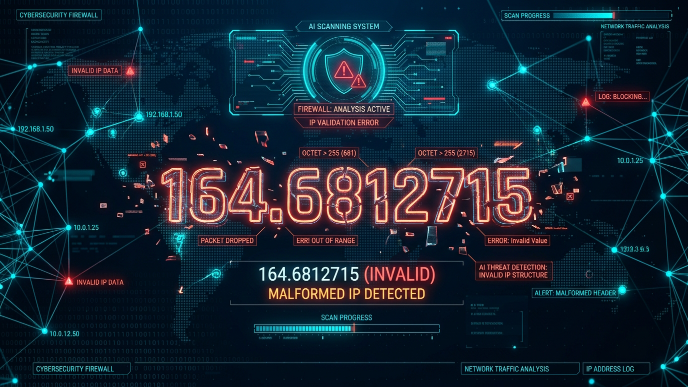
In today’s internet-driven world, users often come across unusual numeric patterns that look like IP addresses but do not actually follow networking rules. One such example is 164.6812715, a sequence that appears technical at first glance but is not a valid Internet Protocol (IP) address. People usually search for this type of number after seeing it in logs, websites, or technical discussions and want to understand whether it represents a real device, server, or security threat.
To understand 164.6812715 properly, it is important to know how IP addressing works in real networking systems. An IP address is a unique numerical label assigned to devices connected to a network, allowing them to communicate over the internet. According to standard networking principles, IPv4 addresses are made of four separate numbers called octets, each ranging from 0 to 255, such as 192.168.1.1 . The sequence 164.6812715 breaks this structure completely, making it invalid and unusable in any real internet communication system.
What Is 164.6812715?
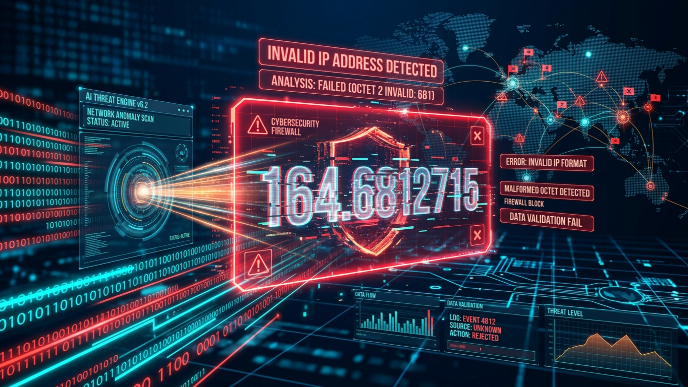
164.6812715 is a malformed IP-like string that does not follow IPv4 formatting rules. A proper IPv4 address must contain four numeric segments separated by dots, but this sequence only partially resembles that structure. More importantly, the value “6812715” exceeds the allowed numerical range for any IP octet, which makes it technically impossible to function as a real network identifier.
Because of this incorrect structure, no router, server, or operating system can interpret 164.6812715 as a valid address. It is not assigned by any internet authority and does not belong to any registered network. Instead, it is often treated as an example of invalid formatting used in educational content, debugging discussions, or error demonstrations.
Why 164.6812715 Is Not a Valid IP Address
The main reason 164.6812715 is invalid is that it does not comply with IPv4 rules. Each IPv4 address must contain exactly four octets, and each octet must fall within the range of 0 to 255. This structure ensures that devices can convert IP addresses into binary form and route data correctly across the internet.
In this case, the structure is broken because the number is not properly segmented and contains a value far beyond the acceptable limit. Networking systems automatically reject such formats during validation because they cannot be mapped into binary addressing. As a result, 164.6812715 cannot be used for communication, routing, or identification in any network environment.
How Real IP Addresses Work in Networking
To understand why invalid formats like 164.6812715 fail, it is important to understand how real IP systems function. An IP address acts as a digital identifier that allows devices to send and receive data across networks. It works like a mailing address, ensuring that data packets reach the correct destination.
IPv4 addresses are based on a 32-bit structure divided into four octets. Each octet represents 8 bits of data, allowing values between 0 and 255. This system supports billions of unique combinations, enabling global internet connectivity. Without this structured format, routers and servers would not be able to interpret or deliver data accurately.
Common Causes of Invalid IP-Like Numbers
Numbers like 164.6812715 often appear due to human error, system glitches, or data formatting issues. One of the most common causes is incorrect typing when entering IP addresses manually in network settings, configuration files, or server dashboards. A missing dot or misplaced digit can easily turn a valid address into an invalid one.
Another cause is software or logging errors. Sometimes automated systems generate or record data incorrectly, producing malformed numeric strings that resemble IP addresses. These errors are not actual network identifiers but rather artifacts of processing issues within software systems or databases.
Cybersecurity Perspective on Invalid IP Formats
From a cybersecurity standpoint, invalid IP-like strings such as 164.6812715 are not direct threats, but they can indicate inconsistencies in system logs or configuration issues. Security analysts often review such anomalies to ensure that networks are functioning correctly and no misconfigurations exist.
Cybersecurity research also shows that attackers sometimes rely on unusual formats or misleading data structures to confuse systems or hide malicious activity. While 164.6812715 itself is harmless, understanding why such anomalies appear helps professionals detect irregular patterns in network traffic and improve system security.
IP Address Validation and System Security
IP validation is a critical part of internet communication systems. Before any device can send or receive data, its IP address must be verified to ensure it follows correct formatting rules. This prevents routing errors and ensures stable communication between devices across global networks.
When a system encounters a sequence like 164.6812715, it immediately fails validation because it does not match IPv4 structure requirements. This automatic rejection is essential for maintaining internet stability, as even a single malformed address could disrupt communication or cause system errors.
Why Users Confuse It With a Real IP Address
Many users mistake sequences like 164.6812715 for real IP addresses because they resemble familiar numeric patterns used in networking. People often encounter real IP examples such as 192.168.1.1 or 10.0.0.1, so similar-looking numbers can appear valid at first glance.
Additionally, online content about networking sometimes includes unusual or incorrect examples for educational purposes. This can lead to confusion among beginners who are still learning how IP formatting works, making them believe that any dot-separated number sequence might represent a real network address.
The Role of IP Addresses in the Internet
IP addresses play a fundamental role in how the internet functions. Every device connected to a network requires an IP address to communicate with other devices. These addresses allow data to be sent accurately across complex global systems involving millions of routers and servers.
As explained in networking principles, an IP address identifies both the device and its location within a network structure, enabling proper data routing and communication . Without valid IP addresses, the internet would not be able to function, as there would be no reliable way to direct digital traffic.
Conclusion
164.6812715 is not a valid IP address but rather an incorrectly formatted numeric sequence that resembles one. It does not follow IPv4 rules, does not exist in any registered network system, and cannot be used for internet communication. Its structure violates fundamental networking principles, making it purely an invalid example rather than a functional identifier.
Understanding why numbers like 164.6812715 are invalid helps users learn how real IP systems work and why strict formatting rules are essential for global connectivity. As digital systems continue to expand, awareness of IP structure, validation rules, and cybersecurity concepts becomes increasingly important for both professionals and everyday internet users.
