
Introduction
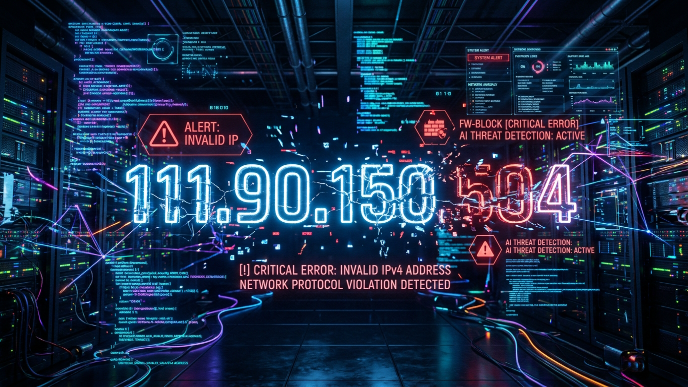
The keyword 111.90.150.504 has recently gained attention across search engines, technology blogs, server monitoring discussions, and cybersecurity communities. At first glance, this sequence appears to be a standard IPv4 address, similar to the countless IP addresses used every second across the internet. However, networking experts quickly recognize that the address does not follow the correct IPv4 structure required for real internet communication. This has led many users to search online for explanations regarding its validity, meaning, purpose, and possible security implications.
In today’s digital world,111.90.150.504 IP addresses are essential for communication between devices, servers, websites, and online applications. Every internet-connected device relies on an IP address to send and receive data accurately. Because of this importance, even an unusual or invalid address like 111.90.150.504 can generate significant curiosity. Website owners may encounter it in analytics reports, developers may see it during testing, and cybersecurity researchers may investigate it after reviewing suspicious network traffic. Understanding why this address is invalid provides useful insight into how internet protocols work and why strict networking standards exist.
The increasing popularity of searches related to malformed IP addresses also reflects growing public awareness about cybersecurity, online privacy, and internet infrastructure. More users today want to understand the technical systems that power websites, cloud services, applications, and digital communication platforms. As a result, strange IP-like strings often become trending technical keywords online.
Understanding What an IP Address Is
An IP address, or Internet Protocol address, is a unique numerical identifier assigned to every device connected to a computer network. Devices such as smartphones, laptops, servers, routers, and smart home systems all rely on IP addresses to communicate with one another. Without IP addressing systems, the internet would not function because devices would have no reliable way to identify destinations for data transmission.
The most common addressing format used today is IPv4, also known as Internet Protocol Version 4. IPv4 addresses contain four groups of numbers separated by periods. Each group is called an octet. A typical IPv4 address may look like 192.168.1.1 or 111.90.150.204. These addresses allow routers and servers to identify devices and direct internet traffic correctly.
Every time a user opens a website, streams a video, sends an email, or uses an online application, IP addresses help ensure the information reaches the intended destination. This entire process occurs within milliseconds, yet it depends completely on precise numerical formatting and globally recognized networking rules.
The internet also uses IPv6, a newer protocol created to solve IPv4 address shortages. IPv6 contains much longer hexadecimal address structures, allowing for vastly more unique devices worldwide. Despite the gradual adoption of IPv6, IPv4 remains the dominant standard in many regions and systems today.
Why 111.90.150.504 Is Technically Invalid
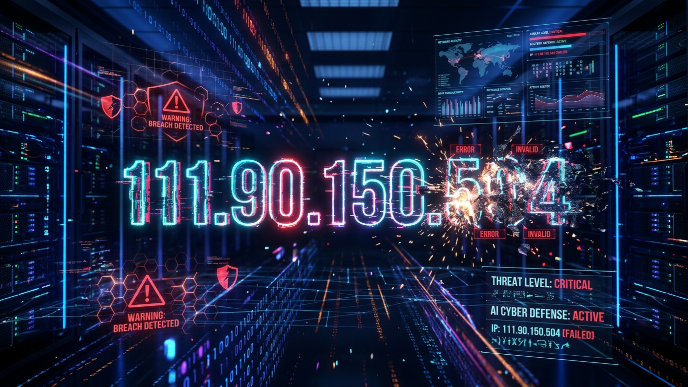
Although 111.90.150.504 visually resembles a real IPv4 address, it is technically invalid because the final octet exceeds the maximum allowed value. In IPv4 formatting, every octet must contain a number between 0 and 255. Since the last section of this address is 504, the address violates the basic structural rules of IPv4 networking.
This limitation exists because IPv4 uses an 8-bit numerical structure for each octet. An 8-bit binary value can only represent numbers ranging from 0 to 255. Once a number exceeds that limit, networking hardware and software can no longer interpret it as a valid IPv4 address. As a result, routers, servers, firewalls, operating systems, and network applications reject such addresses automatically.
Many users mistakenly assume that any four-number sequence separated by periods qualifies as a valid IP address. However, networking standards are extremely strict because internet routing requires precise accuracy. Even a single incorrect digit can make an address completely unusable for real-world internet communication.
Invalid IP addresses like 111.90.150.504. cannot be assigned to devices, cannot host websites, and cannot route internet traffic. Their appearance online is usually linked to formatting errors, software issues, or incorrectly generated data rather than legitimate networking activity.
Common Reasons Invalid IP Addresses Appear Online
There are several reasons why invalid IP addresses such as 111.90.150.504 appear across websites, search engines, analytics dashboards, and technical reports. One of the most common causes is simple human error. A user manually entering network information may accidentally type 504 instead of 204 or another valid number.
Software glitches also contribute significantly to malformed IP addresses. Automated logging systems process enormous amounts of network data every second. If these systems fail to validate numerical values correctly, they may accidentally record invalid IP-like strings in databases or analytics reports. Search engines can then index this data, making the malformed address visible online.
Another common reason involves educational demonstrations and software testing. Developers sometimes intentionally use invalid IP addresses when testing validation systems or teaching networking concepts. Using structurally invalid addresses prevents accidental communication with real devices while still demonstrating how IP validation works.
Data corruption is another factor. When large databases, server logs, or tracking scripts process incomplete or broken information, malformed numerical strings may appear. These strings often resemble legitimate IP addresses closely enough to confuse users and attract search engine attention.
The Structure and Rules of IPv4 Addressing
IPv4 addressing follows a highly organized mathematical structure designed to ensure efficient global communication. Every IPv4 address contains exactly four octets separated by periods. Each octet represents an 8-bit value, limiting its range to numbers between 0 and 255. These rules are universal across all internet-connected systems.
This structure allows routers and networking equipment to interpret addresses quickly and reliably. Routers examine IP addresses to determine where internet traffic should travel. If an address violates formatting rules, the routing process fails because the hardware cannot interpret the destination properly.
Valid IPv4 addresses also support subnetting, private networking, routing hierarchies, and communication protocols. Businesses, cloud providers, hosting companies, and internet service providers all rely on strict IP standards to maintain stable network infrastructure.
When malformed addresses enter systems, they may cause validation errors, failed connections, rejected requests, or corrupted logs. Modern applications therefore use automated validation systems to detect invalid IP addresses before processing them further.
Understanding these structural rules helps users recognize why addresses like 111.90.150.504 cannot function within real networking environments. Even though the first three octets are valid, the final octet breaks the address entirely.
Cybersecurity Implications of Strange IP Addresses
Cybersecurity professionals constantly monitor network traffic for suspicious activity, unusual patterns, and malformed requests. When unfamiliar IP-like strings appear in logs or security reports, they often trigger investigations because abnormal formatting may indicate software errors, malicious scanning activity, or corrupted traffic data.
Modern cyberattacks frequently involve automated bots scanning websites for vulnerabilities. These bots generate huge volumes of network requests, some of which may contain corrupted or intentionally malformed information. Invalid IP addresses occasionally appear within these logs because of scripting mistakes or attempts to bypass filtering systems.
However, an invalid address like 111.90.150.504 does not automatically indicate malicious activity. In many cases, malformed addresses are harmless and result from software bugs, incorrect parsing systems, or accidental formatting issues.
Security experts generally recommend focusing on broader behavioral indicators rather than isolated invalid addresses alone. Multiple failed login attempts, suspicious traffic spikes, repeated automated scans, and unusual geographic access patterns provide stronger evidence of cybersecurity threats.
Understanding invalid IP addresses can still improve digital awareness because it teaches users how networking systems validate information and detect errors. This knowledge is especially valuable for website administrators, IT professionals, and cybersecurity learners.
How Internet Service Providers Manage IP Addresses
Internet Service Providers, commonly known as ISPs, play a central role in assigning and managing IP addresses for customers and online services. Every time a user connects to the internet, their ISP assigns an IP address either dynamically or statically depending on the service configuration.
Dynamic IP addresses change periodically using systems called DHCP servers. Static IP addresses remain fixed and are commonly used for websites, business servers, and enterprise infrastructure. Global organizations coordinate IP allocation to ensure that address ranges remain unique worldwide.
A valid address beginning with 111.90.150 may belong to a legitimate IP allocation block assigned to a hosting provider or ISP. However, once the final octet exceeds acceptable limits, as with 504, the address loses all functional validity.
ISPs also rely on strict validation systems to prevent routing problems and address conflicts. Invalid addresses are automatically rejected because they cannot be interpreted correctly by networking infrastructure.
The careful management of IP address allocation is essential for maintaining internet reliability, preventing routing conflicts, and supporting billions of connected devices globally.
Why Invalid IP Addresses Matter in Web Analytics and Logs
Website owners, developers, and network administrators frequently analyze server logs and traffic reports to monitor user activity, detect attacks, and improve system performance. During this process, unusual IP-like strings sometimes appear within analytics dashboards and firewall logs.
Malformed addresses can originate from broken scripts, incorrectly formatted requests, corrupted browser headers, or incomplete tracking data. If validation systems fail to filter these entries properly, they may appear publicly in reports or search engine indexes.
Developers often build strict IP validation functions into applications to prevent invalid addresses from entering databases. These validation systems help maintain data integrity, improve cybersecurity monitoring, and reduce software errors.
In some cases, invalid addresses may also appear during software testing or API development. Developers intentionally use malformed data to ensure that applications reject incorrect inputs safely and consistently.
Understanding how invalid IP addresses appear in logs helps businesses improve data quality and network security practices. It also explains why seemingly random IP-like keywords often gain visibility in online searches.
The Growing Importance of Networking and Digital Literacy
Public interest in networking, cybersecurity, and internet infrastructure has grown rapidly in recent years. As more people work online, manage websites, use cloud platforms, and depend on digital services, technical awareness has become increasingly important. Keywords like 111.90.150.504 gain popularity because users want to understand unfamiliar networking concepts and suspicious-looking technical information.
Digital literacy now extends far beyond basic internet browsing. Users increasingly learn about IP addresses, VPNs, DNS systems, firewalls, cybersecurity threats, and online privacy protection. Even discussions around malformed addresses help educate users about the technical foundations of the internet.
Businesses also prioritize networking education because cybersecurity threats continue evolving. Employees who understand how network systems function are better prepared to recognize suspicious activity, avoid phishing attacks, and maintain secure online environments.
The curiosity surrounding invalid IP addresses reflects a broader trend toward greater public engagement with technology infrastructure. As internet systems become more complex, understanding networking basics becomes an increasingly valuable skill for both professionals and everyday users.
Conclusion
The keyword 111.90.150.504 may initially appear to represent a legitimate IPv4 address, but technical analysis confirms that it is invalid because the final octet exceeds the maximum permitted range of 0 to 255. Despite its invalidity, the address continues attracting online attention because users encounter similar malformed strings in analytics reports, server logs, cybersecurity investigations, and networking discussions.
Learning why 111.90.150.504 is invalid provides valuable insight into how internet protocols operate, how IP addressing standards function, and why strict validation systems are essential for stable online communication. The topic also highlights broader themes related to cybersecurity, network infrastructure, data validation, and digital literacy.
As internet technology continues evolving, public interest in networking concepts will likely continue growing. Whether someone discovers 111.90.150.504 in a firewall log, technical report, or search result, the address ultimately serves as a useful educational example of how precise internet communication standards must be to support the modern digital world reliably and securely.
