
Introduction to Money BetterThisWorld and Its Core Idea
Money BetterThisWorld is a modern financial philosophy that focuses on how money can be used as more than just a personal tool for spending and saving. It presents money as something that can influence not only individual lives but also communities, systems, and even global development. Instead of viewing money only as a means of personal gain, this idea encourages people to think about its wider purpose.
At its core, the concept is based on the belief that financial decisions carry meaning. Every choice—whether earning, saving, investing, or spending—can shape outcomes beyond personal benefit. This includes social impact, ethical responsibility, and long-term sustainability. In simple terms, it is about using money in a way that improves both your life and the world around you.
This mindset has become more popular in recent years as people look for deeper meaning in financial success. It shifts focus away from pure accumulation and toward purpose-driven financial behavior.

Meaning and Philosophy Behind Money BetterThisWorld
The meaning of Money BetterThisWorld is rooted in the idea that money is not just currency but a reflection of human values. It suggests that financial systems are deeply connected to ethics, priorities, and decision-making. In this view, money is not neutral—it influences behavior and outcomes depending on how it is used.
This philosophy encourages people to rethink what “wealth” actually means. Instead of measuring success only by bank balance or possessions, it expands the idea of wealth to include stability, freedom, well-being, and positive impact. Many modern financial discussions linked to this concept highlight that money should serve life goals rather than control them.
It also introduces the idea that financial behavior is a moral choice. Spending, saving, and investing can either contribute to fairness and sustainability or reinforce inequality depending on how decisions are made.
Evolution of Modern Financial Thinking and Its Connection
Modern financial thinking has evolved significantly from traditional ideas of saving and investment. In earlier systems, the focus was mostly on accumulation and security. However, today’s financial environment is more complex, digital, and interconnected, leading to new ways of thinking about money.
Money BetterThisWorld fits into this evolution by combining financial awareness with personal values. It reflects a shift where people are no longer satisfied with just earning money—they also want to understand its impact. This includes ethical investing, conscious spending, and responsible financial planning.
In many modern interpretations, money is seen as a “tool for progress,” where everyday financial decisions contribute to long-term stability and meaningful outcomes.
Money as a Tool for Personal and Social Transformation
One of the strongest ideas behind Money BetterThisWorld is that money can transform both personal life and society. On a personal level, it provides stability, opportunities, and freedom. On a broader level, it influences education, healthcare, innovation, and environmental systems.
When money is used intentionally, it can create positive cycles. For example, ethical spending supports responsible businesses, which then grow and continue supporting fair practices and sustainability. This creates a chain of positive financial impact across society.
This approach also encourages individuals to think beyond short-term gain. Instead of focusing only on immediate consumption, it promotes long-term thinking that benefits both the individual and the wider community.
Ethical Finance and Responsible Financial Behavior
Ethical finance is a central part of the Money BetterThisWorld concept. It focuses on aligning financial actions with moral and social responsibility. This means considering where money goes, how it is used, and what impact it creates.
Responsible financial behavior includes supporting fair trade, sustainable businesses, and transparent financial systems. It also encourages avoiding harmful financial practices that contribute to inequality or environmental damage.
In modern financial discussions, this approach is often linked with mindful spending and ethical investing, where individuals actively choose options that match their values and long-term goals.
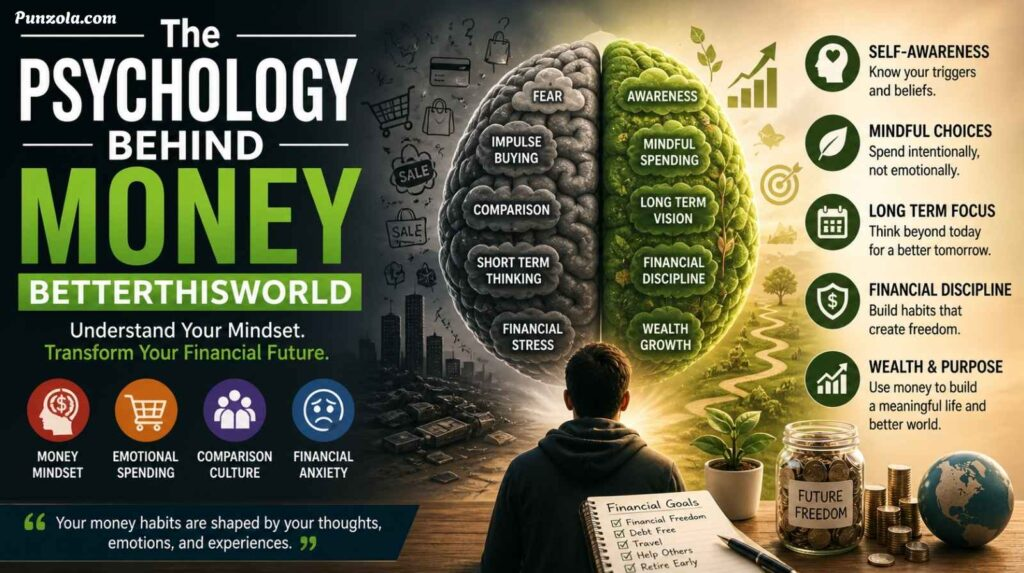
Financial Awareness and the Psychology of Money
Money BetterThisWorld also highlights the psychological side of finance. Human behavior plays a major role in financial decision-making, often more than logic or knowledge. Emotions like fear, desire, and social pressure can strongly influence how people handle money.
Financial awareness helps individuals recognize these patterns and make more balanced decisions. It encourages people to separate emotional reactions from financial planning, leading to more stable outcomes.
This mindset also promotes clarity in financial thinking. Instead of reacting impulsively, individuals are encouraged to understand long-term consequences and align money decisions with personal goals.
Long-Term Wealth Thinking and Sustainable Growth
Long-term wealth thinking is a major pillar of this philosophy. It focuses on building financial stability gradually rather than chasing quick results. This includes saving consistently, investing wisely, and avoiding unnecessary financial risks.
Sustainable growth means ensuring that wealth creation does not come at the cost of future stability. It encourages financial habits that remain strong over time, even during economic changes or personal challenges.
In this view, wealth is not just about money accumulation but also about financial security, peace of mind, and independence.
Global Impact of Money and Economic Responsibility
Money has a global impact because it flows through systems that affect industries, governments, and societies. Every financial decision contributes to larger economic patterns, even if indirectly.
Money BetterThisWorld emphasizes understanding this global connection. When individuals make responsible financial choices, they influence markets and encourage better practices in businesses and industries.
This creates a ripple effect where ethical financial behavior leads to more sustainable systems. Over time, this can contribute to more balanced and fair economic development worldwide.
Practical Application of Money BetterThisWorld Thinking
Applying this concept in real life begins with awareness. It means observing how money is earned, spent, and invested, and asking whether these actions align with personal values and long-term goals.
People who follow this mindset often focus on improving financial discipline, reducing unnecessary expenses, and prioritizing meaningful financial goals. It is not about perfection but about gradual improvement.
Even small changes—like conscious spending or consistent saving—can create a stronger financial foundation over time.
Conclusion: Understanding the Real Purpose of Money BetterThisWorld
Money BetterThisWorld is more than a financial idea; it is a way of thinking that connects money with purpose, responsibility, and long-term impact. It encourages people to move beyond simple accumulation and focus on how money can improve life in meaningful ways.
The philosophy highlights that money is most powerful when it is used consciously. It can create stability, opportunity, and positive change when guided by awareness and responsibility.
In conclusion, Money BetterThisWorld reminds us that financial decisions are not just personal—they are part of a larger system that shapes society. Using money wisely means improving not only your own future but also contributing to a better world.
